The Lenni Lenape, it's worth noting, were the first seasonal visitors to enjoy the summer splendor of Absecon Island, not requiring a boardwalk or new construction to grow their attraction. Costing five thousand dollars and built 10 feet wide in sections of 12 feet, the first boardwalk was dedicated on June 16, 1870. No stores or commerce of any kind were permitted within thirty feet of the walk, and at the end of each summer season for many years, the Boardwalk was actually taken apart and stored for the winter months.
The goal had nearly been accomplished; visitors could walk out of their hotel and onto the beach. But they were put off by the sand. Developers hadn’t anticipated how much of an issue the sand would be and enlisted the help of a railroad conductor and a hotel owner to create a walkway over the sand. Alex Boardman and Jacob Keim presented the idea of an eight-foot-wide wooden footwalk that would lead from the beach to town. The boardwalk was constructed from wooden planks arranged in what was known as herringbone patterns on top of a substructure of concrete and steel.
The rolling chair, introduced in 1884, was the only vehicle allowed on the Boardwalk, once it was finished, and eventually extended to include the famous Steel Pier. Of course, the boardwalk has been replaced a number of times since, once in 1884 and again in 1889. Reconstruction after the hurricane in 1944 resulted in a twenty-foot wide, two-mile-long boardwalk with pilings five feet above the beach so the tides could wash safely underneath. In the beginning, there had been no railings, which explains the accounts of people who have fallen off the boards, usually in the act of flirting. Early bathers wore bathing dresses of wool flannel with stockings, canvas shoes, and large straw hats. The more daring bloomer suits and stockings worn by these bathing beauties were not introduced until 1907. Censors roamed the beaches monitoring bathers' self-exposure and looking for offenders who showed more flesh than the local code allowed.
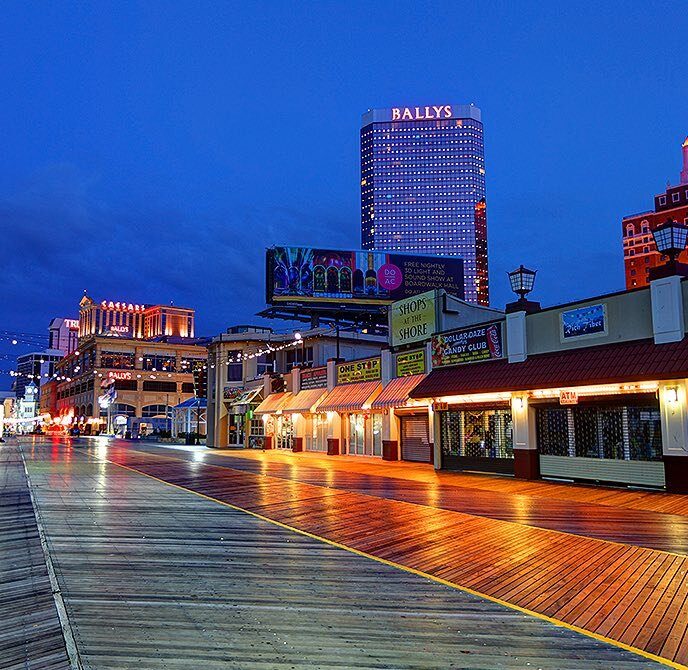
The mile-long original now extends six miles from Gardner’s Basin to Ventnor City, and is, at its widest, 60 feet across, making it the world’s longest wooden structure walkway. In the early 1900′s amusement piers were built along the boardwalk, and a walk along its length was considered fashionable, or even a runway of sorts until it became a draw for the exceptional and unusual. It was not unusual, for example, to see people lined up for Dr. Courney’s Premature Infant Exhibit or a marathon dance contest. The Historic Convention Hall along the boards continues to play host to many special events including concerts, sporting events, etc. Stunts, shows, the greatest big band music of the era, the original Miss America pageant, and parades were all part of the entertainment, too. In 1929, just months before the stock market and U.S. economy crashed, The New York Times toasted the AC Boardwalk as, “A magnificent proof of America’s newly found wealth and leisure. It is an iridescent bubble on the surface of our fabulous prosperity.”
Today, the Atlantic City Boardwalk is still a staple of the Jersey Shore experience, providing access to hotels, gift shops, attractions, and the famous casinos that hundreds of thousands of travelers from all over the world flock to every year. The historic Steel Pier has inspired others like it, including Central Pier, Pier Shops, and Garden Pier which hosts a terrific museum. So take an afternoon to stroll along that timeless Boardwalk to walk in the footsteps of history. Breathe in the ocean air in the shadow of the resident shops and casinos, and see if you can imagine what it might have been like more than 100 years ago.v